

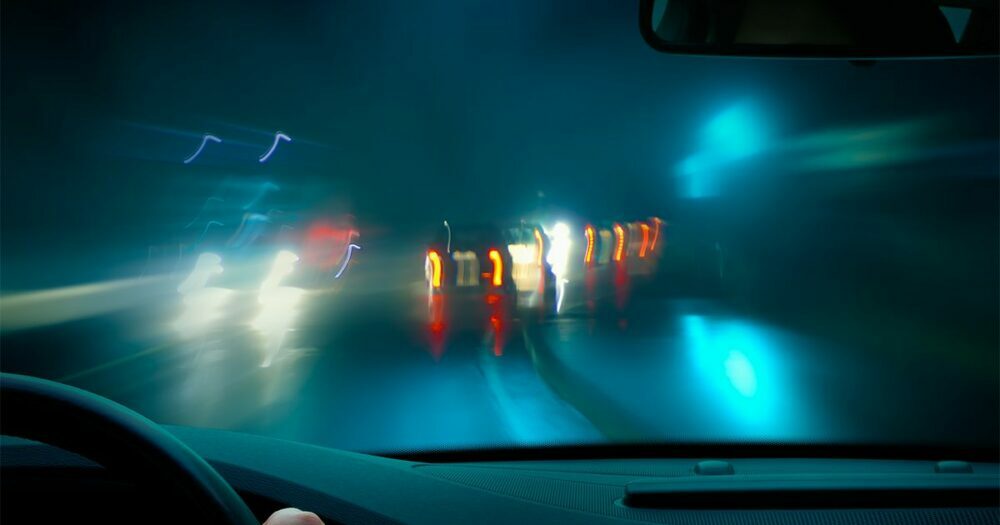
Driving depends heavily on vision, but darkness and bad weather can reduce visibility, increasing accident risks. Conditions like rain, fog, and darkness limit visual cues and the brain’s ability to process them. Adapting driving habits and using vehicle equipment properly are crucial for safety. This guide offers strategies to maintain visibility and control in adverse conditions.
The Impact of Weather on Visibility
Mother Nature can be unpredictable, throwing a variety of visual obstacles in a driver’s path. Each condition affects light and perception differently, requiring specific adjustments behind the wheel.
Rain: Reflection and Distortion
Rain is perhaps the most common adversary. It reduces visibility in two main ways: by physically obstructing your view through the windshield and by altering how light interacts with the road. Water droplets on glass distort images, making objects appear blurred or shifted. More dangerously, wet roads act like mirrors. At night, headlights from oncoming traffic reflect off the wet asphalt, creating a blinding glare that can wash out lane markings and hide obstacles. Heavy downpours can create a “wall of water” effect, drastically reducing forward visibility to just a few feet.
Fog: The White Wall
Fog is deceptive. It feels soft and harmless, but it is incredibly dangerous for drivers. Fog consists of tiny water droplets suspended in the air that scatter light beams. When you turn on your high beams in fog, the light reflects off these droplets and bounces right back into your eyes, creating a “white wall” of glare. This eliminates contrast and makes it nearly impossible to judge distance or speed. You might feel like you are moving slower than you actually are, leading to dangerous situations if traffic ahead suddenly stops.
Snow: Contrast and Camouflage
Snow presents a dual challenge. Falling snow acts like a moving screen, cluttering your field of vision and, like rain, reflecting light. Accumulated snow on the ground, however, creates a different problem: a lack of contrast. When everything is white—the road, the shoulder, the horizon—it becomes difficult to distinguish where the safe driving path ends and the ditch begins. “Whiteout” conditions, caused by heavy snow and wind, can completely disorient a driver, removing all visual references to the outside world.
Lighting the Way: Using Your Vehicle’s Tools
Your vehicle is equipped with specific lighting systems designed to counter these visibility issues. Knowing when and how to use them is crucial for your safety and the safety of others.
Low Beams vs. High Beams
The rule of thumb for adverse weather is simple: stick to low beams. As mentioned, high beams are designed to cast light far down the road, but in rain, fog, or falling snow, that strong beam reflects off precipitation and causes glare. Low beams direct light down toward the road surface, illuminating the pavement and lane markers with less reflection back at the driver.
Fog Lights
If your vehicle has them, fog lights are invaluable. These are mounted low on the bumper and have a wide, flat beam pattern. They are designed to cut under the fog layer, illuminating the road surface directly in front of the vehicle and the edges of the road. This helps you stay in your lane without causing the glare associated with headlights. However, they should only be used when visibility is significantly reduced, as they can be distracting to other drivers in clear conditions.
Auxiliary Lighting
For those who frequently drive in rural areas or off-road conditions, aftermarket lighting can be a game-changer. Specialized equipment, such as light bars for trucks, can provide massive illumination for dark, unlit trails or work sites. While these are often illegal for use on public highways due to their brightness, they are essential for visibility in specific off-road or severe weather scenarios where standard headlights fall short.
Strategies for Safe Driving in Low Visibility
Equipment helps, but driver behavior is the ultimate safety feature. When visibility drops, your driving habits must change immediately.
Slow Down and Increase Distance
This is the golden rule. If you can’t see as far ahead, you have less time to react to a hazard. Reducing your speed gives you more time to process visual information and stop if necessary. Furthermore, you should increase your following distance. The “three-second rule” should become the “six-second rule” or more in poor weather. This buffer zone provides a safety net if the car in front brakes suddenly or hits a patch of ice.
Eliminate Distractions
In high-stress visual environments, your brain is working overtime to interpret the road. You cannot afford to split your attention. Turn down the radio, put the phone away, and ask passengers to keep conversation to a minimum. Your full focus needs to be on the white line and the taillights ahead.
Use the Right Markers
In heavy fog or blinding glare, looking directly ahead can be disorienting. Instead, focus on the white line on the right side of the road (or the passenger side). This provides a reliable reference point for your lane position without subjecting your eyes to the glare of oncoming headlights. Avoid fixating on the taillights of the car in front of you, as this can lead to “target fixation,” where you unconsciously steer toward what you are looking at.
The Vital Role of Emergency Vehicle Lights
While we focus on our own visibility, we must also be hyper-aware of emergency responders. Police cars, ambulances, fire trucks, and tow trucks rely entirely on their emergency lights to be seen in chaotic weather.
These flashing lights are not just a signal to pull over; they are a warning that the traffic pattern has changed or that there are people working on the road. In low visibility, the strobe effect of emergency lights can be disorienting, but they cut through fog and rain better than steady lights.
When you see flashing lights ahead:
- Slow down immediately. Do not wait until you are close to the scene.
- Move over. If safe to do so, change lanes away from the emergency vehicle to give them space.
- Resist the urge to stare. “Rubbernecking” is dangerous enough in clear weather; in rain or fog, looking away from your path for even a second can lead to a secondary accident.
Conclusion
The road is unpredictable, and visibility is your best defense against hazards. While modern vehicles have advanced safety features, they can’t replace caution. Responsible drivers adjust their habits to specific dangers like rain, fog, or snow.
